
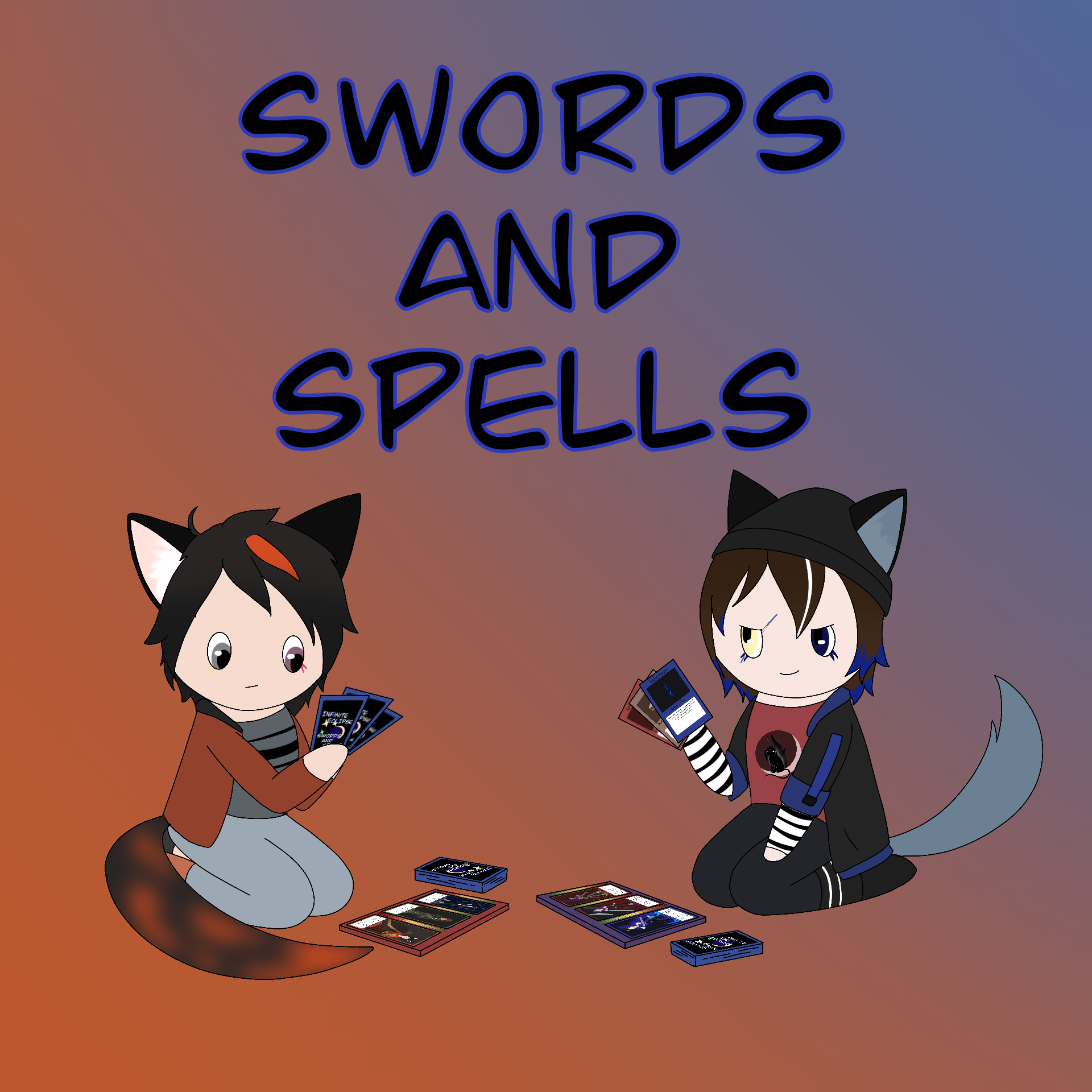
How to play:
Objective: Defeat your opponent by knocking down all three of their characters.
A character is knocked down when their health reaches 0. Once a character has been knocked down, they can no longer fight or use their abilities.
The last player with at least one character still standing wins the game.
Step 1: find your opponent. Swords and Spells is a two player game. Both players will need their own deck, game board and a D6.
Step 2: choose your team. Each player selects three characters from their deck and places the Character Cards in the slots on their game board. Players cannot use the same character while playing against each other.
Step 3: Build your deck. Your deck consists of the Action Cards for your chosen characters, along with any Food, Item, Relic, or Glyph cards your team can use. Different teams may have different numbers of cards. This is a normal part of the game. Each character's cards are the same color as their character card, making them easy to find when building your deck. Action Cards include a character's abilities, attacks, and reactions.
Before Shuffling, remove any cards that belong to characters not on your team or that can’t be used by any character on your team from your deck.
Shuffle the remaining cards. This becomes your playing deck. Draw five cards to form your starting hand. At the end of each turn, draw one card from your deck.
Note for step 3: If you are using only cards from a Starter Pack, you can skip this step. Each Starter Pack includes all of the cards needed to play with the characters it contains.
If you have added one or more character packs to your collection, choose your three characters first. Then remove any character specific cards that do not belong to your team. Food, Item, Relic, and other cards that are not tied to a specific character may remain in your deck.
Step 4: Decide who goes first. You can choose who goes first, or leave it to chance by having each player roll a D6. The player with the highest roll takes the first turn. Have fun playing Swords and Spells.
Cards:
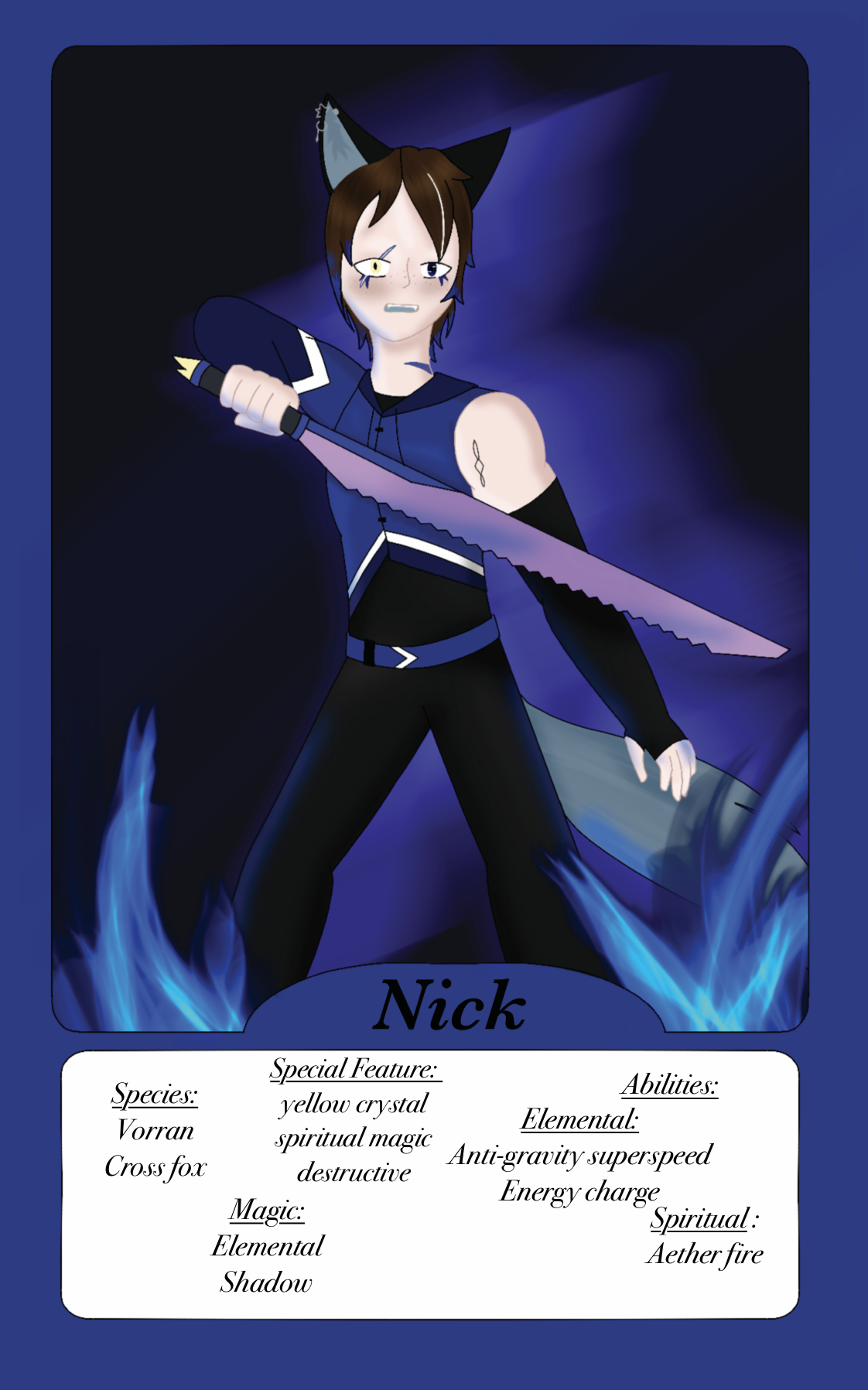
Character Cards
Character Cards are used to display the characters on your team. Place them in the slots on the board to keep track of their health. When a character drops to 0 health they have been knocked down and can no longer fight.
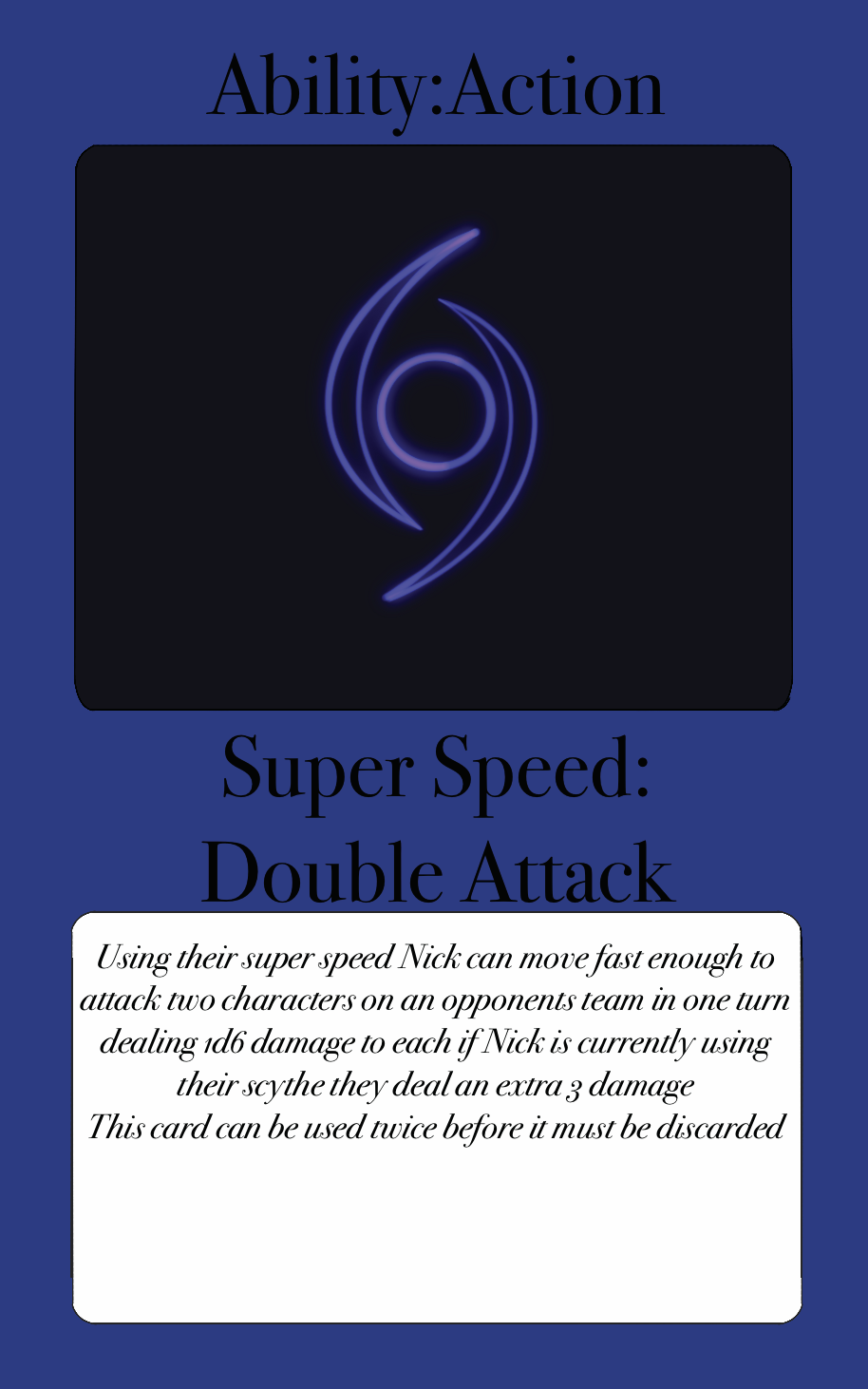
Each character has a set of action cards that can be used to determine what they can do on a turn, action cards include any ability, basic or enhanced attack, or reactions the character may have. If a character is down, you cannot use any of their cards.
Rules Tip: Most cards are played during your turn. Reaction cards are different. Keep them in your hand, and watch your opponent's actions. If one of their actions matches the trigger on your Reaction card, you may play it immediately.
Action Cards
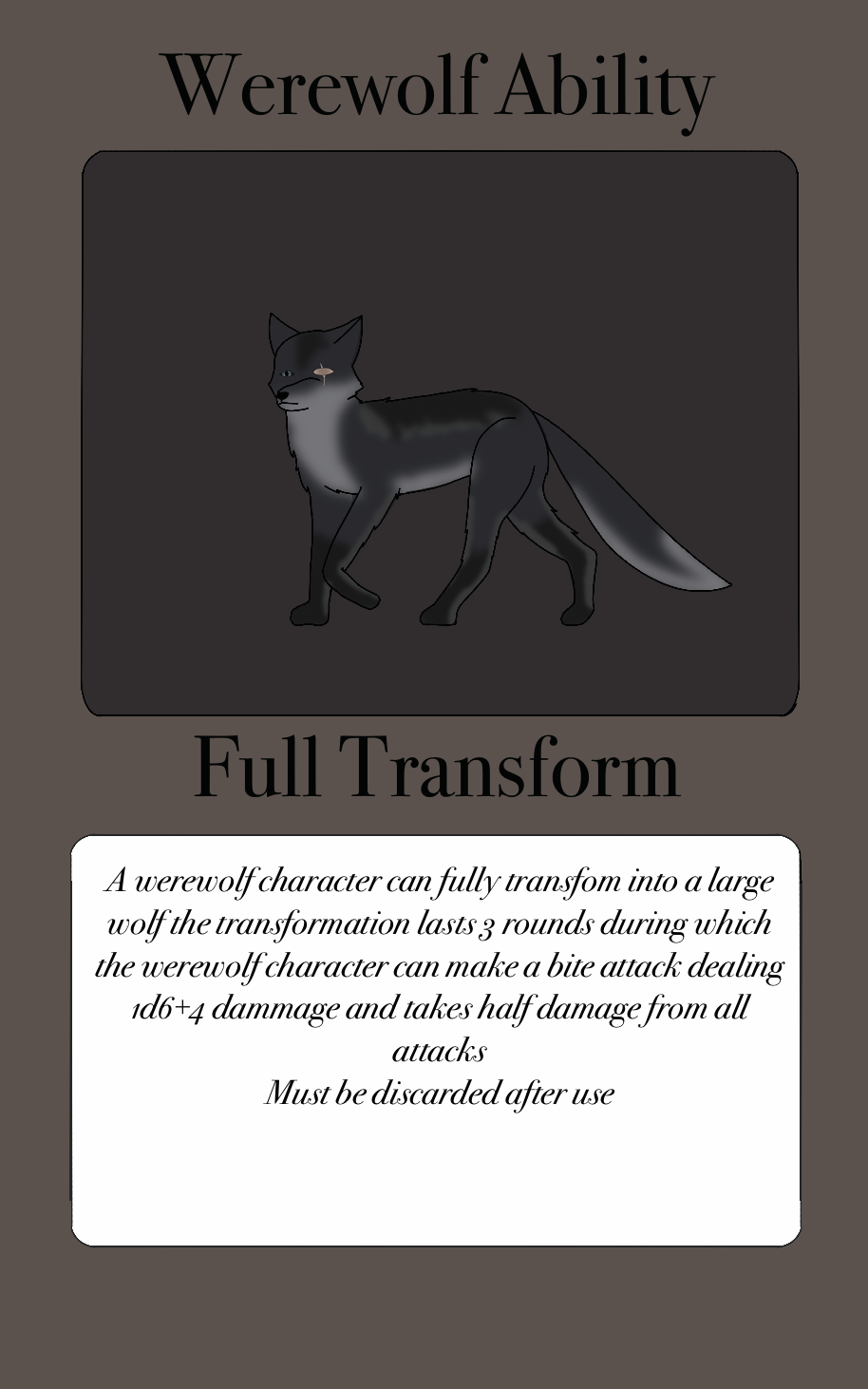
Species abilities:
Some characters have special abilities based on their species. One example is werewolves, who can transform. These cards are not specific to one character and can be used on any character who is the species on the card.
Food Cards
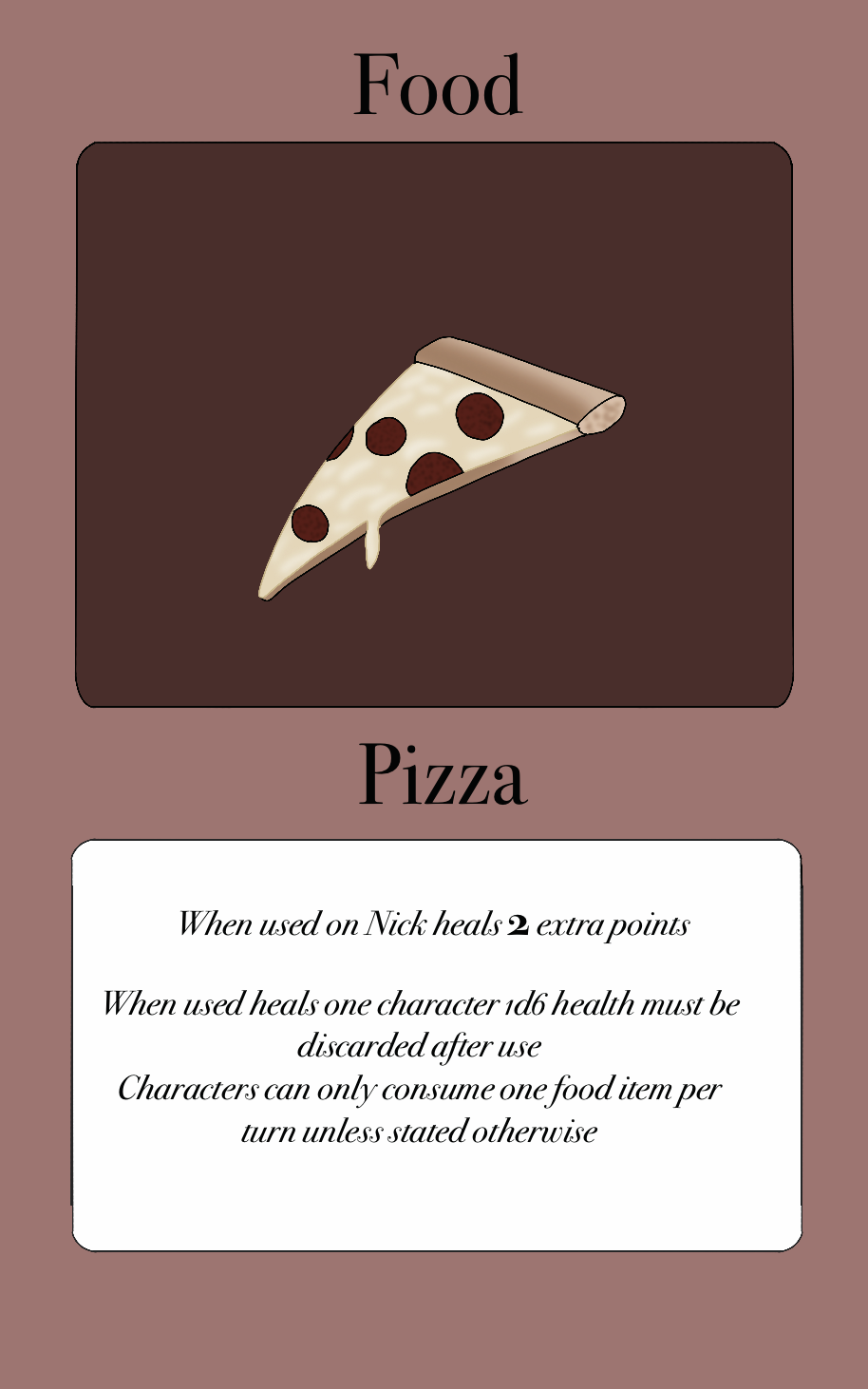
Food cards can be used to restore health.
Most characters can be healed by any food card. The one exception is the blood card which can only be used by vampires.
Glyph spells
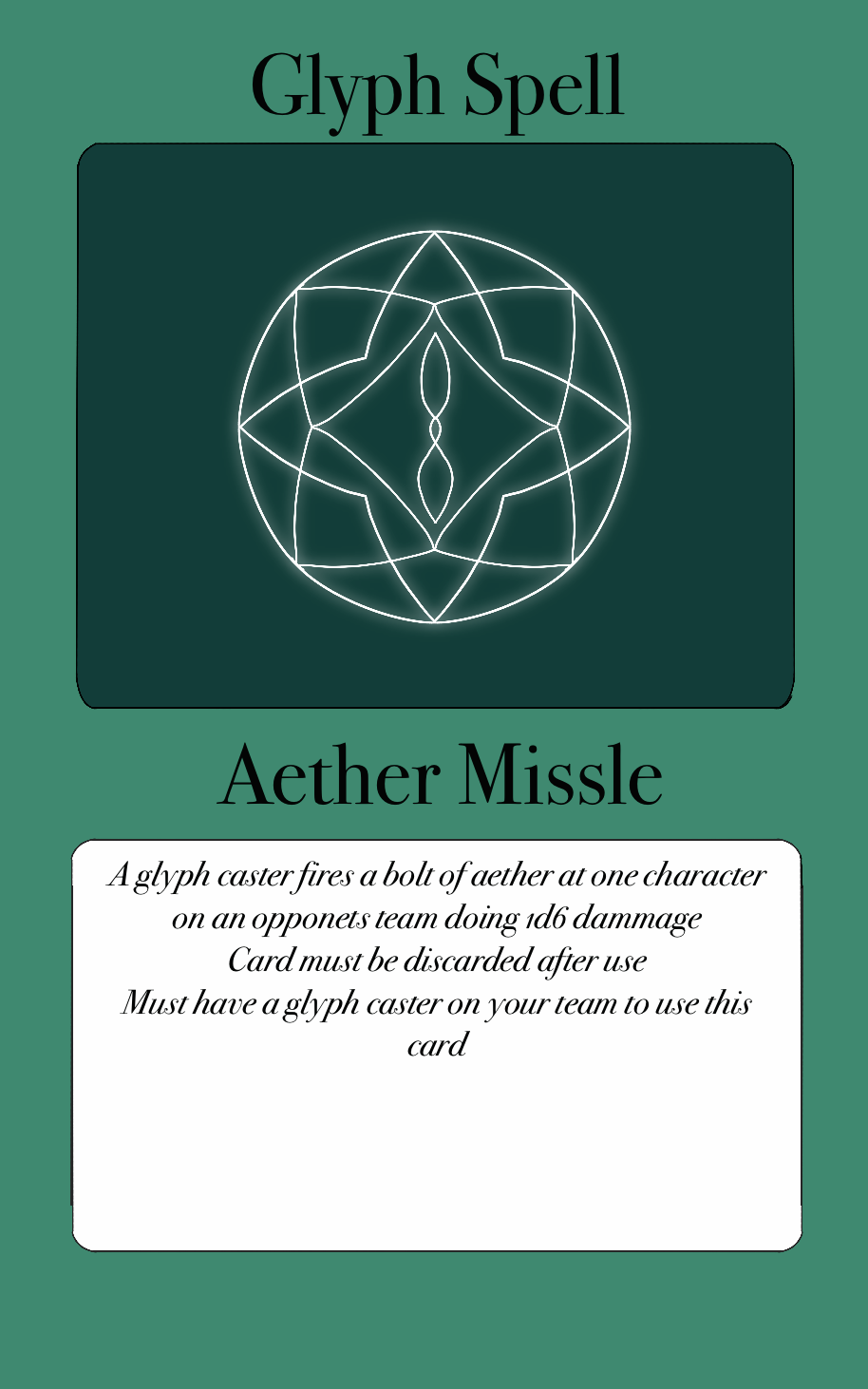
Some characters are glyph casters. They don’t have as many actions as others but can cast powerful glyph spells.
A glyph caster can cast any spiritual magic Glyph Spell but must have either of the following to cast an elemental magic glyph spell:
- an elemental affiliation of the same type as the spell they want to cast
or
- an elemental crystal item card
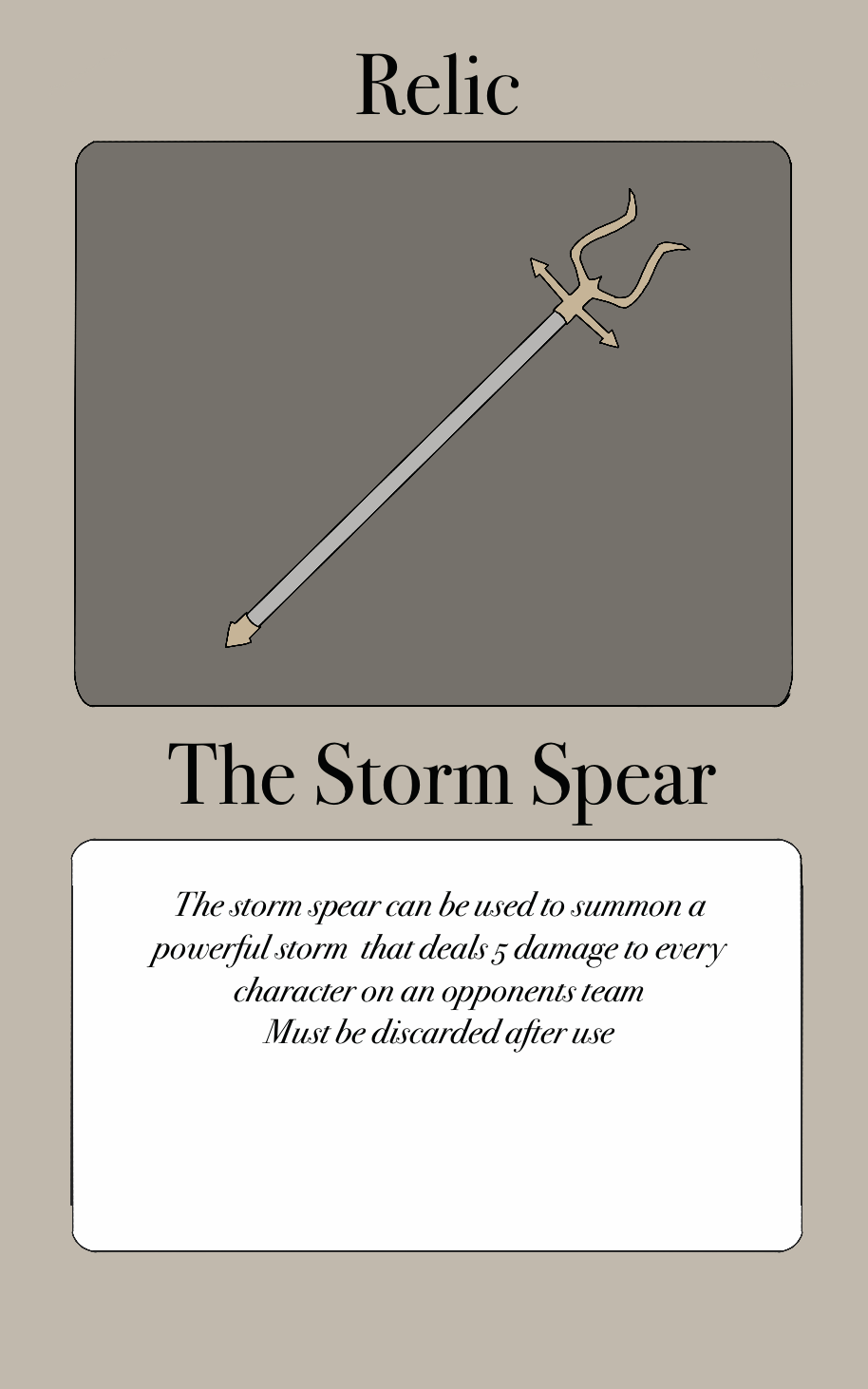
Items and Relics provide helpful bonuses during battle.
Some improve attacks. Others allow additional actions or provide unique effects. Each card explains exactly how it is used.
Using a relic is considered a bonus action.
Item and relic cards
1. Play one Action and one Bonus Action, or two Bonus Actions, and one free action.
2. Discard cards that have reached their maximum number of uses.
3. Draw one card and end your turn.
4.If you don’t have any cards you can play, your turn is over. Draw one card.
5. One round is when each player has one turn.
Your Action and Bonus Action do not have to come from the same character. Action cards are labeled Action, Bonus Action, or Reaction depending on when they can be used. Using a Relic is considered a Bonus Action.
Food cards are considered a free action.
Reaction cards are usually played during the other player's turn in response to an action. Each Reaction card explains when it can be played.
If you do not have any cards you can play, draw one card and end your turn. Otherwise, draw one card at the end of your turn, even if you played more than one card or did not play any cards.
Once you have used a card as many times as it can be used, discard it. When you are first learning, it may be helpful to lay your cards in front of you as you play them. To keep track of how many times you have used a card, turn it 90 degrees each time you use it.
The game ends when one player has no characters left standing. The player with at least one character still standing wins.
On your turn:
Glossary:
Main action: the main thing you do on your turn
Bonus action: a quicker action you can do alongside your main action
Reaction: an action that is not used on your turn but in response to being attacked
D6: a six sided die
HP: Health Points
Swords and Spells is a card game appropriate for ages 11 and up. It takes about 20 - 30 minutes to play, but we have seen some epic battles take longer.
Purchase the game here.
Swords and Spells features 33 unique characters. Starter Packs are designed for one player. Each Starter Pack includes: a unique card pack containing 3 randomly selected characters, along with all of the character specific cards needed to play those characters, a game board, and one D6. Starter Packs will also include a selection of food, relic, and/or item cards.
Add On Packs include 1 character, all of the character specific cards needed to play that character, and a selection of randomly chosen food, relic, or item cards.
Click this link to learn more about your characters.
Click this link to learn more about the lore and worlds that enable the characters abilities and magic.